British Dyslexia Association
Dyslexia Factsheet
A concise overview of what dyslexia is, how it may affect learning and everyday life, the value of individual support, and the BDA’s current definition of dyslexia.
Open the BDA factsheetParent advice & resources
A carefully chosen collection of Brain Power guidance, books, listening options, learning tools and further reading for families supporting a dyslexic learner.
New parent article
What might families and teachers notice, when could extra support help, and what is the difference between screening and a diagnostic assessment?
Read the articleNew Brain Power article
Why timely identification, responsive specialist tuition and dyslexia-informed teaching all matter—not only for progress at school, but for confidence and lifelong learning.
Read the articleCreated by Brain Power
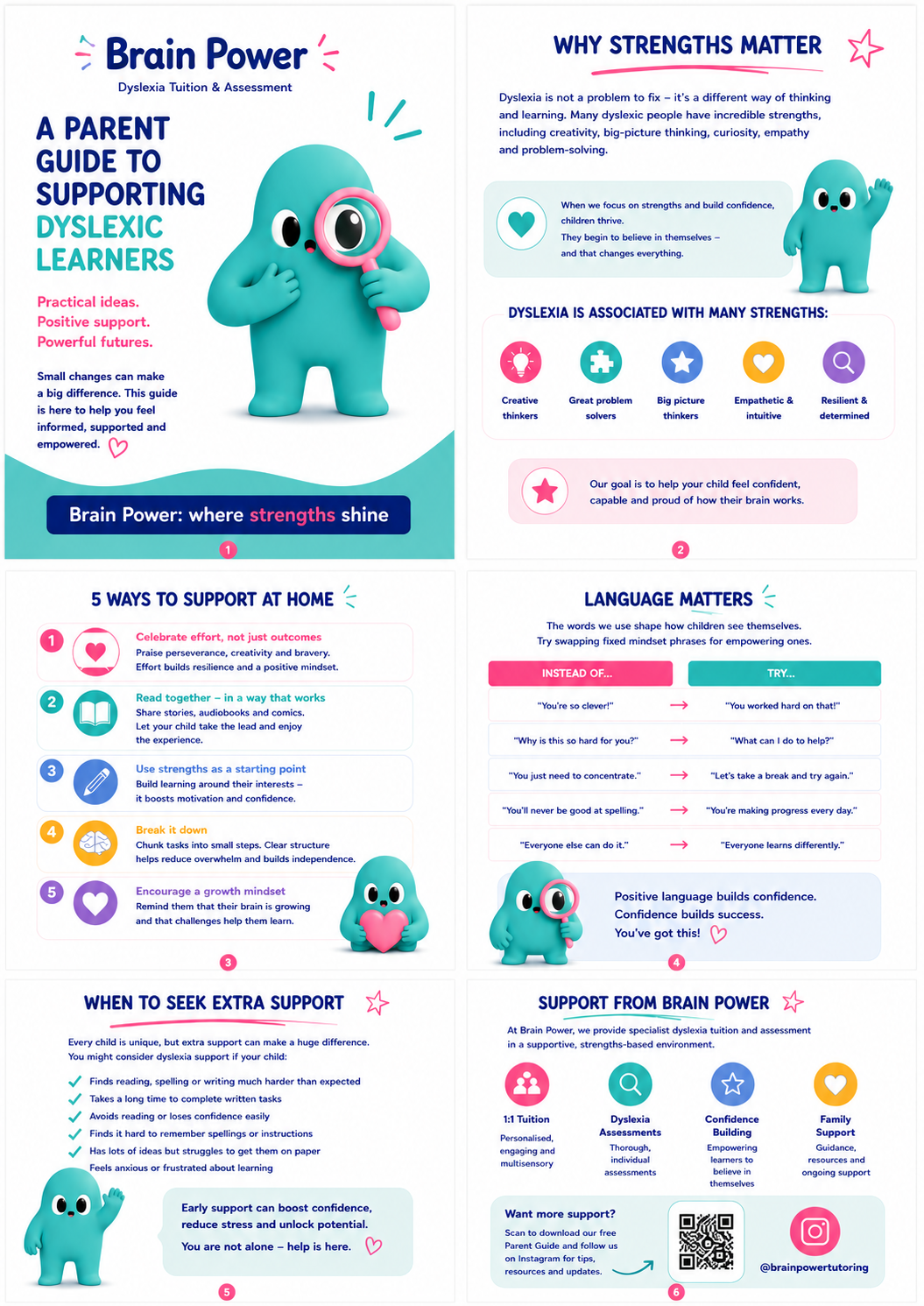
Practical ideas, positive language and strengths-first support to help families feel informed, supported and empowered.
Trusted guides and factsheets
Accessible resources from the British Dyslexia Association, Made By Dyslexia and Twinkl, selected to help families understand dyslexia, support learning and recognise strengths.
British Dyslexia Association
A concise overview of what dyslexia is, how it may affect learning and everyday life, the value of individual support, and the BDA’s current definition of dyslexia.
Open the BDA factsheetBritish Dyslexia Association
Practical ideas for supporting reading, spelling, writing, maths, homework, revision, organisation, concentration and memory in ways that build confidence.
View the BDA bookletMade By Dyslexia
A strengths-focused report exploring how imagination, big-picture thinking, problem-solving, questioning and people skills can contribute to entrepreneurship and innovation.
Find the report in the resource libraryTwinkl
An introductory parent guide explaining possible signs of dyslexia and offering simple home strategies such as reading together, multisensory learning, manageable steps and positive encouragement.
View the Twinkl parent guideExternal resources: these links open the publishers’ official websites. Some resources may require registration or a subscription, and their content or availability may change.
Recommended reading
Two accessible, strengths-focused books by Kate Griggs, founder of Made By Dyslexia.
For parents and educators
Kate Griggs
A clear introduction to understanding, valuing and supporting dyslexic thinking, with practical ideas for the people around a dyslexic learner.
View publisher informationTo share with children
Kate Griggs
An illustrated book that helps younger readers recognise their dyslexic-thinking strengths and feel positive about the way they learn.
View book informationTools for learning
Digital tools can provide motivating practice and alternative ways to develop important skills. They should complement—not replace—responsive teaching matched to the learner.
Spelling practice
A primary-age spelling app with UK curriculum lists, recorded words and the option to create personalised lists. Its game-style rewards can make regular practice feel more manageable.
Visit the official Squeebles websiteTyping and literacy
A structured, multisensory online course for ages 7+ that develops touch-typing while reinforcing reading and spelling through seeing, hearing and typing words.
Explore TTRS for familiesBefore subscribing: check current prices, device requirements, privacy information and whether the resource suits your child’s age and individual learning profile.
Listening counts too
Listening to books can support enjoyment, vocabulary and access to age-appropriate ideas when decoding print requires significant effort. Audible is one option, and This Is Dyslexia is available in audio format.
Further reading
This British Dyslexia Association report examines GCSE outcomes and the educational disadvantage experienced by many young people with specific learning difficulties. It may be particularly useful for parents, educators and schools interested in the wider national picture.
Read the official BDA reportA note about recommendations: These resources are shared for general information and because Ann‑Marie has found them useful. Brain Power is not responsible for external content, and inclusion does not replace individual professional advice or imply that one resource will suit every learner.
Would you like tailored guidance?